Floating and Emergent Aquatic Plants (water lilies and more!)

Water Lilies and Floating Aquatic Plants

Why are aquatic plants good for filtration?

Mother Nature knows what she is doing!   She uses aquatic plants all the time!

Not just a pretty face - Aquatic plants absorb nutrients from the water. Nutrients like nitrogen and phosphorus, (a  byproducts of fish waste and decaying organic matter).  When there is standing water, there is an aquatic ecosystem.  Whether this ecosystem is pleasing to humans or not, depends on if the water looks clear and clean or not.  The nutrients in the water will be used by something.  If it's not the aquatic plants humans like, it will be ALGAE! 

Aquatic plants absorb these nutrients for and use it to flower and grow, effectively competing with algae for these resources.  This process not only helps in maintaining clear water but also improves the overall water quality, making the environment healthier for aquatic life.

The roots of aquatic plants  also serve as an ideal habitat for beneficial bacteria and other microorganisms. These microorganisms play a critical role in the breakdown of organic materials and detoxification of harmful substances in the water.  Aquatic plants use nutrients in the water and provide more surface area for beneficial bacteria too!
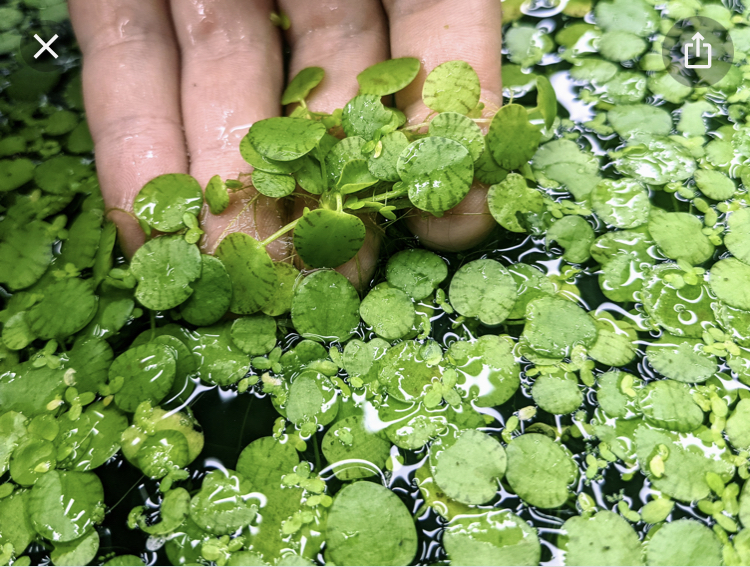


What is considered a floating plant?

When the roots do not need to be rooted in mud, gravel or a pot, they just hang down into the water.  Best filtration ever!

Frogbit

or Sponge Plant
Botanical name: Limnobium spongia

Hardiness Zone: 6 – 10

Perennial or Annual: Annual

Planting Depth/Habitat: Floating Plant, Place it where it is very shallow and low water movement.

Size:  less than an inch.  It spreads

Flowers: They do develop little white flowers

Tags: Floating Plant, 

What to Know:

What to know:

This little floater is a  super-nutritious food source for your fish if they munch on it. If you happen to have turtles, they love it.  The leaves provide excellent surface coverage.

Parrots Feather

Botanical name: Myriophyllum aquaticum

Hardiness Zone: 4 to 11

Perennial or Annual:  Perennial

Planting Depth/Habitat:  Emergent Plant, water depth above roots0″-6″

Size: Up to 6″ inches

Flowers:  No

Tags:  Floating Plant

What to Know:

What to know:

This soft feathery plant is an excellent oxygenator.  It an provide shelter and shad to fish.  However, it can be extremely invasive!!  I have seen shallow ponds full of this stuff. It can form dense surface mats of vegetation that can crowd out other plants. 

Water Hyacinth

Botanical name: Eichhornia crassipes

Hardiness Zone:   9 to 11

Perennial or Annual: Annual

Planting Depth/Habitat:  Floating plant

Size:  3 to 12 inches tall.

Flowers: lilac

Tags: Floating Plant

What to know:

You have to have Water Hyacinth!  These floating plants are so cool!  Their roots hang down into the water for fantastic filtration. 

Keep in  mind, they cannot withstand a hard freeze.  

If you have 2 of them – you have 1000! At first it will happen slowly.  Each plant will create 3 miniature replications of itself. So cute… but before you know it they are EVERYWHERE!

What to Know:

Do I consider these invasive?  Well they can be and should never be let go in a natural waterway, but in a small pond they can be kept under control.  They have bulbous green round parts that are filled with air and will pop if you stop on them.  When they overgrow, just take some out and compost them. 

The best thing about these is If you let a couple go into your waterfall and either let them get stuck on the side or help them by putting a rock on the roots, they will make babies going down the side of the water fall!  They cascade down and it is so pretty.  

Put them where they won’t get swept into the skimmer.  Some people put a floating hoop in and fill it with these. 

There is a secret to getting them to bloom too.  The blooms only last one day, but to get them to bloom, let them crowd each other and be way crowded.  Then they will flower!

Water Lettuce

or Water Cabbage
Botanical name: Pistisa stratioes

Hardiness Zone:   9 to 11

Perennial or Annual: Annual

Planting Depth/Habitat:  Floating plant

Size:  3 to 12 inches tall.

Flowers: no

Tags: Floating Plant

What to Know:

What to know:

These floating velvety green leaves create roots hanging down that filter pond water!  While they don’t flower, they are still lovely. 

Once you have a couple, you will have hundreds or thousands before you know it.  Just pull them out when they are too many.  

Water Lily

Botanical name: Nymphaea

Hardiness Zone:   4 to 11

Perennial or Annual: Perennial

Planting Depth/Habitat:  best when pot is set 30″ below water line or directly in pond gravel/muck at 24″.

Size:  spread 2 to 5 feet (depending on variety)

Flowers: You can get lilies is practically any color!

Tags: Floating Plant, Emergent plant


Read more about water lilies:

What to Know:

 Flowers come up and open mid morning and close mid afternoon.  They re open for roughly 4 days and then they die back.  Soon there will be new blooms! Flowers often bloom from June until September. The roots of water lilies are called “rhizomes” and often referred to as “tubers”.

I recommend fertilizing them each month to keep blooms vigorous! 

Water lilies can spread rapidly through a pond even going 15 feet in 5 years.  It helps to have them in a pot because you can more easily pull them out for fertilization.  But more importantly, you can pull them out to divide the tuber and either remove it so the lilies don’t get over crowded or repot for new lilies. 

Lotus

There are so many different varieties!
Botanical name: Nelumbo

Hardiness Zone:   4 to 11

Perennial or Annual: Perennial or Annual depending. 

Planting Depth/Habitat:  Plant with the soil line 12 to 18 inches below the water. 

Size:  12 to 54 inches tall!

Flowers: OMG – 5 to 12 inches large! 

Tags: Emergent Plant

What to Know:

Lotus are dramatic plants!  They want to be pampered and will reward you with absolutely stunning flowers!

People often get Water Lilies and Lotus confused.  Lotus start with very similar leaves, but the 2nd set that comes out will rise above the water, unlike lily pads that float on top of the surface.  Also there is a difference in the way the leaf sheds water.  On a lotus water ball up like its just been covered in Rainx!

Lotus like to be in water that is out of a strong current.  Still water is best. 

Be careful with Lotus! Handle the tuber with great care and not disturb or break the growing tips.

There are dwarf varieties do best in water two to 12 inches deep.