Aquatic Pond Plants
Aquatic Pond Plants
Scroll down for PLANT PHOTOS!
This page has all the pond plants listed here on one page.
If you would rather look at certain categories, just give them a click. Click on questions for the answers.
No, you don't (she said through gritted teeth). The thing is - actually there are many things....check it out:
- Plants are THE best filtration.
- You don't have to water these plants!
- They soften the rockiness of a pond.
- They are gorgeous and can make a pond STUNNING!
Just make sure you know what is invasive, what will thrive your pond and where to plant it!
Not all ponds have been built to have plants in them. For plants to be installed, there needs to be shallow areas (or shelves) where they can be planted into gravel Usually this can be right on the edge of the pond.
If you pond has wall with no rocks that go straight down, it will be difficult to install bog plants. There are other ways to utilize plants in that situation! Floating plants or floating plant islands may be a good solution.
Water Lilies prefer to be down roughly 24 inches.
Mother Nature knows what she is doing! She uses aquatic plants all the time!
Not just a pretty face - Aquatic plants absorb nutrients from the water. Nutrients like nitrogen and phosphorus, (a byproducts of fish waste and decaying organic matter). When there is standing water, there is an aquatic ecosystem. Whether this ecosystem is pleasing to humans or not, depends on if the water looks clear and clean or not. The nutrients in the water will be used by something. If it's not the aquatic plants humans like, it will be ALGAE!
Aquatic plants absorb these nutrients for and use it to flower and grow, effectively competing with algae for these resources. This process not only helps in maintaining clear water but also improves the overall water quality, making the environment healthier for aquatic life.
The roots of aquatic plants also serve as an ideal habitat for beneficial bacteria and other microorganisms. These microorganisms play a critical role in the breakdown of organic materials and detoxification of harmful substances in the water. Aquatic plants use nutrients in the water and provide more surface area for beneficial bacteria too!
Aquatic plants whose roots can be in the water, but the foliage is above the water are referred to as "Marginals" or "Bog Plants". Regular (terrestrial) plants would die if you had their root ball wet like this all the time.
BUT there is a difference between marginal plants and bog plants!
Marginal = Plants that can have their soil line under the water more. They are considered emergent plants because the root ball is under the water and they are emerging out form the water. The soil line might be 6 inches under the water.
These plants are fantastic for filtering the water because they use up nutrients in the water that would otherwise be consumed by ALGAE! (cause really, algae is a plant too...) Scroll through to see photos and descriptions of great aquatic plants.
Bog = plants that like to be in wet dirt or rocks, with their soil line right at water level or a few inches under.
These plants are knows as Zone 1 plants (for aquatic planting.) and are perfect for wetlands and bogs that are filtering your pond.
When the roots do not need to be rooted in mud, gravel or a pot, they just hang down into the water. Best filtration ever!
They are plants that we think of as normal land plants (terrestrial) but in fact, can be grown as bog plants! Often, nurseries will sell them to you as "aquatic plants" that seem to be different than regular plants (and cost more) but are the same exact plants.
The hardiness zone tells you in which zone the plant can live and come back the following spring. If you live in zones 8, 9 or 10, some plants will continue growing year-round. In Colorado if you are on the Front Range (not the mountains) you are in Zone 5.
Need to figure out what zone you are in? Learn more with our Hardiness Zone Guide.
Arrowhead
or Arrow Arum
Botanical name: Peltandra virginica
Hardiness Zone: 5 – 11
Perennial (it will come back each year)
Planting Depth/Habitat: Marginal, Zone 2. 0 to 6 inches. Plant should be out of the water. The crown can be in the water.
Size: 6 to 12 inches
Flowers: They do develop little white flowers
Tags: Marginal Plant, Planting depth Zone 2, Hardy in Colorado
What to Know:
Arrowheads bring texture and depth with their arrowhead shaped leaves. The flowers are not the main attraction. They are hardy to zone 5, which means they can survive when it gets as cold as -20 to -15 F. Would help if an upside down pot was put over the crown from Jan – February.
Take it out of the pot and put some 4 to 5 inch rocks around it to hold in place and protect from curious fish. No need to leave in the pot.
It may spread a little, but it is not a vigorous spreader. It likes a little shade too.
Bloody Dock
or Water Dock
Botanical name: Rumex sanguineus
Hardiness Zone: 5 to 12
Perennial or Annual: Perennial
Planting Depth/Habitat: Bog Plant, planting one 1, 0 to 3 inches. Plant leaves should be out of the water, crown in the water.
Size: 6 to 18 inches tall
Flowers: Not really.
Tags: Bog Plant, Planting depth Zone 1, Hardy in Colorado
What to Know:
A Bloody Dock plant has interesting leaves. It likes very shallow water, but beware, if you plant it when the pond is full and the water level drops, this plant may suffer. Find a place where the water movement is not a lot, but where the water levels wont’ fluctuate much.
If it starts to get tall and spindly, going to seed, cut off the seed stem to help it grow more bushy.
To plant, Take it out of the pot and put some 4 to 5 inch rocks around it to hold in place and protect from curious fish. No need to leave in the pot.
Bulrush
or Common Rush
Botanical name: Juncus effusus
Hardiness Zone: 4
Perennial or Annual: Perennial
Planting Depth/Habitat: Marginal, Planting depth Zone 2. 2 to 5 inches above soil line. When they are mature they will go deeper.
Size: 2 to 4 feet, it s a spreader!
Flowers: not really
Tags: Rush, Marginal Plant, Planting depth one 2, Hardy in Colorado
What to Know:
This is a nice vertical plant that is great in larger ponds to add a lushness to the edge. Dragonflies love bulrush!
The rushes are round like onion plants and one sign that it is Bulrush is the little doodad at the top that it develops.
Be careful though, it can try to take over if not watched. It doesn’t like the deeper water so that does help.
Cardinal Flower
or Lobelia
Botanical name: Lobelia cardinalis
Hardiness Zone: 3 – 9
Perennial or Annual: Perennial
Planting Depth/Habitat: Bog plant, Planting Zone 1 or 2. 3 to 6 inches
Size: it can get as tall as 4 to 5 feet! When it is doing well it can spread 1 to 2 feet.
Flowers: RED!
Tags: Planting Zone 1 or 2, Bog Plant, Hardy in Colorado
What to Know:
If you want to attract hummingbirds this is your plant! It’s tall flower spikes will last for weeks! This plant also likes partial shade/partial sun
Good area to plant is tucked in areas in the stream.
I recommend planting a bunch together, I think they look better that way.
Cattail - Dwarf
Botanical name: Typha minima
Hardiness Zone: 3
Perennial or Annual: 2 to 3 feet
Planting Depth/Habitat: Bog Plant. Planting Zone 1. Loves wet muddy soil. 2 to 6 inches.
Flowers: corndog looking things. (stiff flower stalks)
Tags: Bog Plant, Planting Zone 1, Hardy in Colorado, Invasive
I really don’t understand why they aren’t called “Corn Dog plants”. Wait, they were probably named before corn dogs were invented…that’s why!
What to Know:
Stems leaves are flat, similar to garlic. Thrives in standing water. They are a very nice border in a larger pond and aquatic life loves them.
These can spread. Caution – do not plant in regular standard cattails if you have a pond smaller than 100 feet. They can seriously take over. Be careful even with miniature or dwarf cattails as they spread easily.
Unless you are super hands on with your pond, or do not paying extra money to remove cattails (they are super hard to get out!) – do not use cattails at all!
Chives
Botanical name: Allium schoenoprasum
Hardiness Zone: 3 – 9
It’s really an annual. Can re-seed itself. Planting Depth/Habitat: Zone 1. 0 inches. Plant should be out of the water. The crown can be in the water, with the root ball maybe slightly out.
Size: 6 to 12 inches
Flowers: purple round flowers
Tags: Secretly aquatic
What to Know:
What to know:
Start with a chives plant. Put the root ball so the soil line is just barley above the water. Put in the side of a stream where the rocks protect the dirt of the root ball.
These are edible. Just cut some green stalks, chop them up in your salad for an oniony flavor or just eat them right there in the garden!
Chordata Chameleon
Botanical name: Houttuynia cordata ‘Variegata’
Hardiness Zone: 5 – 10
Perennial or Annual: Perennial
Planting Depth/Habitat: Bog plant, Planting Zone 1, 3 to 6 inches
Size: 6″-12″ in.
Flowers: tiny white, but that is not the main interest with this plant. The first photo shows Chordata Chameleon between impatiens.
Tags: Bog Plant, Planting Zone 1, in Colorado
What to Know:
This little plant has such beautiful leaves (leaves mottled with green, yellow and red.) and will spread (but not too much) through rocks on the edge of a steam and look so nice near a bridge as it will go somewhat under it. This plant really softens edges.
(photo is the green and red-ish leaves, not the pink impatiens!)
Good area to plant is tucked in areas in the stream.
Don’t crowd this plant too much as it won’t put up a big fight!
Coleus
Botanical name: Solenostemon
Hardiness Zone: 10 to 11
Perennial or Annual: Annual
Planting Depth/Habitat: just the roots int eh water, not the crown. Protect the root ball with rocks that won’t wash away.
Size: 6 to 20 inches tall
Flowers: Little spikes. Foliage is the main interest.
Tags: Secretly aquatic
What to Know:
The crown of the plant should be above the water line. The roots can be down in the water.
Make sure to use sun loving coleus, unless you have a shady pond. I’m going to try this one this year so I am not sure which varieties do best.
Cork Screw Rush
Botanical name: Juncus effusus ssp. spiralis
Hardiness Zone: 3 – 8
Perennial or Annual: Perennial
Planting Depth/Habitat: Bog plant, planting zone 1. 6 inches down is as deep as you could go.
Size: 1 to 1 1/2 feet tall
Flowers: Not really.
Tags: Bog Plant, Planting Zone 1, Hardy in Colorado
What to Know:
These spiral type leaves have a crazy look for variety in your pond plants. If you really like things looking nice and tidy, these might not be for you.
One variety, the Blue Medusa looks similar with a deeper blue/green color in the stems.
Photo credit: https://www.robsplants.com/plants/JuncuEffus
Creeping Jenny
Botanical name: Lysimachia Nummularia
Hardiness Zone: 3 – 10
Perennial or Annual: Perennial
Planting Depth/Habitat: Bog plant, Planting zone 1. 0 to 4 inches
Size: 2″-14″ in. can spread 2 to 4 feet!
Flowers: little yellow flowers
Tags: Bog Plant, Planting Zone 2, Hardy in Colorado
What to Know:
This a fantastic plant to soften up edge or hide a little liner that might be showing.
You’ve probably seen this as a terrestrial plant. You might have also seen the same plant name, and the plants looks somewhat different. Here is the secret: although they look slightly different and the aquatic plant costs more..THEY ARE THE SAME PLANT! YES! They are darker green when planted in soil and lighter when planted in water.
Just buy the cheep ones at Walmart (not kidding!) like I do and put them everywhere. Not invasive, they spread just the right amount!
Forget Me Not
Botanical name: Myosotis Scorpioides
Hardiness Zone: 3 – 9
Perennial or Annual: Perennial
Planting Depth/Habitat: Bog Plant, 2 to 4 inches, but great stuck between rocks even in the stream.
Size: 1 to 6 inches
Flowers: Yes! tiny blue flowers everywhere!
Tags: Bog Plant, Planting zone 1, Hardy in Colorado
What to Know:
Make sure you check the zone and color as these come in different varieties. They come in pink and white but I love the blue!
These guys have been spreading up my stream in most perfect way!
Frogbit
or Sponge Plant
Botanical name: Limnobium spongia
Hardiness Zone: 6 – 10
Perennial or Annual: Annual
Planting Depth/Habitat: Floating Plant, Place it where it is very shallow and low water movement.
Size: less than an inch. It spreads
Flowers: They do develop little white flowers
Tags: Floating Plant,
What to Know:
What to know:
This little floater is a super-nutritious food source for your fish if they munch on it. If you happen to have turtles, they love it. The leaves provide excellent surface coverage.
Hibiscus
Botanical name: Hibiscus
Hardiness Zone: 4 – 9
Perennial or Annual: Perennial
Planting Depth/Habitat: Bog plant, Planting Zone 1 . water can be 1 to 4 inches over soil line.
Size: 5′-8′ Spread 2 to 3 feet.
Flowers: White, pink red, depends on variety
Tags: Secretly aquatic, Planting Zone 1 or 2, Bog Plant, Hardy in Colorado
What to Know:
What to know:
Want to attract butterflies and bees? Put in Hibiscus!
They have plate sized flowers! These grow to a full on bush, so make sure to put them on the back side of the pond so they don’t block your view.
Horsetail Rush - Dwarf
Botanical name: Equisetum scirpoides
Hardiness Zone: 4 – 9
Perennial or Annual: Perennial
Planting Depth/Habitat: Bog plant, Planting Zone 1. 1 to 3 inches
Size: 8″-12″ in.
Flowers: Not really
Tags: Bog Plant, Planting Zone 1, Hardy in Colorado
What to Know:
Make sure you don’t get the full size version of this. They spread and can be invasive. The Dwarf Horsetail Rush gives an interesting look with its jointed, hollow stems. They say they are evergreen but often turn brown in the winter.
Great on the edge in very shallow area for a larger pond. Will be a great filter.
Deer don’t care for this plant much, or so I’ve heard.
Impatiens
Botanical name: Lysimachia Nummularia
Hardiness Zone: 10 to 11
Perennial or Annual: Annual (and well worth it!)
Planting Depth/Habitat: Bog plant, Planting zone 1. 0 to 2 inches
Size: 2″-8″ in. can spread 2 to 4 feet!
Flowers: Lots of them! Pink, or white, or purple, or fusia, white, or pink…
Tags: Secretly aquatic, planting zone 1
What to Know:
This is my favorite secretly aquatic plant! You can buy these in a 6 pack of little 2 inch long plugs and slip the root ball right down between some rocks, maybe put a little gravel over it, and these guys will grow to MOUNDS of flowers!
I think they work really well on the side of a waterfall or stream. Just make sure the root ball is protected and shoved between some good size rocks. Make sure the soil line is just above the water line.
Pick the colors you want to enjoy for the season and you get to pick different ones next year!
They start off small, but will go nuts! They will crowd out other plants so don’t put them too close.
Lilies (also known as Water Lily)
Botanical name: Nymphaea
Hardiness Zone: 4 to 11
Perennial or Annual: Perennial
Planting Depth/Habitat: best when pot is set 30″ below water line or directly in pond gravel/muck at 24″.
Size: spread 2 to 5 feet (depending on variety)
Flowers: You can get lilies is practically any color!
Tags: Floating Plant, Emergent plant
Read more about water lilies:
What to Know:
Flowers come up and open mid morning and close mid afternoon. They re open for roughly 4 days and then they die back. Soon there will be new blooms! Flowers often bloom from June until September. The roots of water lilies are called “rhizomes” and often referred to as “tubers”.
I recommend fertilizing them each month to keep blooms vigorous!
Water lilies can spread rapidly through a pond even going 15 feet in 5 years. It helps to have them in a pot because you can more easily pull them out for fertilization. But more importantly, you can pull them out to divide the tuber and either remove it so the lilies don’t get over crowded or repot for new lilies.
Lizards Tail
or water dragon, or breastweed
Botanical name: Saururus cernuus
Hardiness Zone: 3 – 9
Perennial or Annual: Perennial
Planting Depth/Habitat: Bog and sometimes Marginal when mature. Planting Zone 1. 2″-6″ in.
Size: 1′-3′ ft
Flowers: White
Tags: Bog Plant, Planting Zone 1, Hardy in Colorado
What to Know:
Easy to put in, just put some gravel on the roots to hold in place, the plant will do the rest. I love the spiky tail of white flowers! They have a citrus-y smell to them, which is nice.
Loosestrife - Yellow
Botanical name: Lysimachia Punctata
Hardiness Zone: 4 – 8
Perennial or Annual: Perennial
Planting Depth/Habitat: Bog plant, Planting Zone 1, 1 to 3 inches
Size: 2 to 3 feet tall
Flowers: Lots of yellow flowers!
Tags: Bog plant, Planting Zone 1, Hardy in Colorado
What to Know:
Butterflies love these flowers! Shallow wetland plants, hides even large rocks. Beware, it could spread – a lot, so make sure you keep in check or have a large pond when you use this plant.
Lotus
There are so many different varieties!
Botanical name: Nelumbo
Hardiness Zone: 4 to 11
Perennial or Annual: Perennial or Annual depending.
Planting Depth/Habitat: Plant with the soil line 12 to 18 inches below the water.
Size: 12 to 54 inches tall!
Flowers: OMG – 5 to 12 inches large!
Tags: Emergent Plant
What to Know:
Lotus are dramatic plants! They want to be pampered and will reward you with absolutely stunning flowers!
People often get Water Lilies and Lotus confused. Lotus start with very similar leaves, but the 2nd set that comes out will rise above the water, unlike lily pads that float on top of the surface. Also there is a difference in the way the leaf sheds water. On a lotus water ball up like its just been covered in Rainx!
Lotus like to be in water that is out of a strong current. Still water is best.
Be careful with Lotus! Handle the tuber with great care and not disturb or break the growing tips.
There are dwarf varieties do best in water two to 12 inches deep.
Louisana Purple Iris
or water dragon, or breastweed
Botanical name: Saururus cernuus
Hardiness Zone: 4 – 9
Perennial or Annual: Perennial
Planting Depth/Habitat: Bog Plant, Planting Zone 1, 2″-4″ in.
Size: 2 to 3 feet when mature.
Flowers: velvety dark purple
Tags: Bog Plant, Planting Zone 1 Hardy in Colorado
What to Know:
There are a variety of purple irises. Louisiana Iris Black Gamecock is one of my favorite! They are the really dark purple.
Iris of any kind can be invasive, so be mindful about where you place them and know you may have to cut out tubers if they get going too much.
They are a wonderful part of natural plant filtration and even when they are not in bloom they are beautiful.
These plants bloom a bit later than the yellow iris because they like heat.
Plant terrestrial irises just outside the pond near where the water irises are going for an almost seamless look.
Marsh Marigold
Botanical name: Caltha palustris
Hardiness Zone: 3 – 8
Perennial or Annual: Perennial
Planting Depth/Habitat: Bog Plant, Planting Zone 1, 1 to 3 inches
Size: 12 to 18 inches. (height and spread)
Flowers: Yellow flowers in the spring, 1st to bloom!
Tags: Bog Plant, Planting Zone 1, Hardy in Colorado
What to Know:
These will be the first plants to bloom in the pond! I recommend planting and odd number all over the pond!
The waxy green leaves are lovely even when not in bloom. There are several varieties to choose from and the Giant one can block the pond view if you are not careful where you plant it!
Mint - Aquatic
or just mint.....
Botanical name: Mentha aquatica
Hardiness Zone: 4 – 9
Perennial or Annual: Perennial
Planting Depth/Habitat: Bog plant, Planting Zone 1, 2″-4″ in.
Size: 8 inches to 18 inches.
Flowers: tiny, light purple
Tags: Bog plant, Planting Zone 1, Hardy in Colorado
What to Know:
I love to plant this where I can easily reach it to break off some leaves to put in my tea!
This is so easy to grow. Just put the root ball 1/2 way into the water or all the way in and prop with rocks so it doesn’t move! That’s it! Pollinators are attracted to the flower of the mint so you will see bees and butterflies on it.
Mint can be invasive, so keep and eye on it and pull any that is heading where you don’t want it to go. Keeping an eye on it may not even be good enough…so if you are really hands on and want to try it – go for it. If not, stay away from mint!
Obedient Plant
or False Dragonhead
Botanical name: Physostegia
Hardiness Zone: 5 – 11
Perennial or Annual: Perennial
Planting Depth/Habitat: BOg Plant, Planting Zone 1 Soil line right at waterline or a couple inches below.
Size: can get 2 to 4 feet tall!
Flowers: lavender-pink (can get it in white too)
Tags: Bog Plant, Hardy in Colorado
What to Know:
The obedient plant is semi-aquatic in that it really needs shallow water or soil that is moist. Its lavender-pink spikes of flowers are a big attractant for butterflies, bees, humming birds and other pollinators. Grow near the edge of the pond.
It does prefer full sun. Fertilize once a month in the summer. (use fertilizer tabs!)
Parrots Feather
Botanical name: Myriophyllum aquaticum
Hardiness Zone: 4 to 11
Perennial or Annual: Perennial
Planting Depth/Habitat: Emergent Plant, water depth above roots0″-6″
Size: Up to 6″ inches
Flowers: No
Tags: Floating Plant
What to Know:
What to know:
This soft feathery plant is an excellent oxygenator. It an provide shelter and shad to fish. However, it can be extremely invasive!! I have seen shallow ponds full of this stuff. It can form dense surface mats of vegetation that can crowd out other plants.
Pennywort
Botanical name: Hydrocotyle verticillata
Hardiness Zone: 5 -11
Perennial or Annual: Perennial
Planting Depth/Habitat: Bog Plant, Planting Zone 1, 2 inches
Size: up to 10 inches, but usually low lying. Creeping spread
Flowers: no
Tags: Bog Plant, Planting Zone 1, Hardy in Colorado
What to Know:
Plant these as shallow as you can. The mature plant will grow out into the water and will develop floating mats of leaves.
If you put in in a side area in the stream it will eventually cascade down the stream!
There is a also a variety that looks different than this, the variegated Pennywort.
Pickerelweed
Botanical name: pontederia cordata
Hardiness Zone: 3-10
Perennial or Annual: Perennial
Planting Depth/Habitat: Bog Plant, Planting Zone 1, Soil line right at waterline – I’ve got mine even deeper.
Size: 10″ to 4 feet!
Flowers: spiky blue/violet
Tags: Bog Plant, Planting Zone 2, Hardy in Colorado
What to Know:
This aquatic gem, has luxuriant, glossy foliage resembling arrowheads and showcases striking spikes of blue-violet flowers, each measuring 4-6 inches.
These blooms are a magnet for hummingbirds and butterflies. It blooms well into October!
Pitcher Plant
Or Sarracenia Bug Bat
Botanical name: Sarracenia
Hardiness Zone: 5-10
Perennial or Annual: Perennial
Planting Depth/Habitat: Bog Plant, Planting Zone 1, Soil line at water line.
Size: 8 inches
Flowers: The foliage of these plants are red and green – it might flower a little, but the pitchers are what is interesting.
Tags: Bog Plant, Planting Zone 1, Hardy in Colorado (barely!)
What to Know:
This is a carnivorous plant! Yes! It lures bugs into the pitcher and then dissolves them for a snack!
It is really a Zone 5 plant ( we are Zone 4 here on the Front Range in Colorado) but, if you have a protected and sunny space it might work. I had one in our pond for about 3 years when a really bad cold spell finally got it.
Purple Loosestrife
Botanical name: Lythrum salicaria L.
Hardiness Zone: 3-10
Perennial or Annual: Perennial
Planting Depth/Habitat: Bog Plant, Planting Zone 1, Soil line right at waterline – I’ve got mine even deeper.
Size: 8 feet!
Flowers: spiky pink/violet
Tags: Bog Plant, Planting Zone 2, Hardy in Colorado
What to Know:
Bees love this but, it seeds readily and can produce over two million wind-dispersed seeds per year!
The flowers has pink-purple petals and produces tall flower
spikes and stands up to 8 feet tall.
Purple loosestrife can displace
native vegetative communities.
So because of that, I’m going to recommend staying away from it. I listed it, because it does come up and pond people should know what hey are planting!
Sensitive Plant
Or Mimosa
Botanical name: Neptunia Aquatica
Hardiness Zone: 9-12
Perennial or Annual: Annual
Planting Depth/Habitat: Bog Plant, Planting Zone 1, Moist soil, to over 4″ above crown.
Size: 3 to 5 inches but in warm waters can spread 1 to 5 feet!
Flowers: Might get little pink or yellow bloom. The leaves of these plants are are very delicate and close when you touch them!
Tags: Bog Plant, Planting Zone 1
What to Know:
The Sensitive Plant is not usually sold as an aquatic plant here in Colorado. It’s usually sold as a terrestrial plant. When kept in a normal pot they grow up and get very spindly. They are fun though because then will close down when touched and look like dead sticks! It takes a while for them to open back up. They need a lot of water as that is how they open up and close, through the movement of water in their branches.
In the water they grow out and lay on top of the water. Very cool! These are a small plant and are good in a pond if the pond is small and you can put it in a place where you can walk up and get a good look at it. I have never seen them spread far as the water temperatures aren’t high enough for long periods of time.
Sweet Flag
Or Golden Sweet Flag
Botanical name: Acorus Gramineus ‘Ogon’
Hardiness Zone: 4-11
Perennial or Annual: Perennial
Planting Depth/Habitat: Bog Plant, Planting Zone 1, Soil line right at waterline –
Size: 6″-1′
Flowers: No
Tags: Bog Plant, Planting Zone 1, Hardy in Colorado
What to Know:
Sweet Flag has a citrus scent when it is bruised or pinched. (I don’t know why we would go around pinching it…)
Its grass like leave are sword shaped and bright. Adds great texture to the foliage at the pond. Adds to the filtration and clarity of the water!
Taro
Botanical name : Colocasia esculenta
A variety of names like Black Magic Taro, Elephant ear and other varieties.
Hardiness Zone: 10 to 11
Perennial or Annual: Annual (and well worth it!)
Planting Depth/Habitat: Bog plant, Planting zone 1. 0 to 6 inches
Size: 2 to 4 feet!
Flowers: no
Tags: Secretly aquatic, planting zone 1
What to Know:
Black Magic taro will bring the WOW to your pond! It likes moist soil and partial shade. You can even leave it in the pot (with holes) and surround it by some larger rocks to keep it in place.
Thalia
Or Red Stemmed Alligator Flag
Botanical name: Thalia geniculata ruminoides
Hardiness Zone: 8-10
Perennial or Annual: Annual
Planting Depth/Habitat: Bog Plant, Planting Zone 1, (2 to 6 inches down)
Size: 4 to 6 feet!
Flowers: violet
Tags: Bog Plant, Planting Zone 1,
What to Know:
Broad leaves are gorgeous! An annual here in Colorado, it may not have time to get super tall.
Blooms are violet and bloom out taller than the plant.
Water Celery
Or Variegated water celery
Botanical name: Oenanthe javonica
Hardiness Zone: 5-11
Perennial or Annual: Perennial
Planting Depth/Habitat: Bog Plant, Planting Zone 1, Soil line at water line.
Size: 1-2 feet
Flowers: tiny white flowers
Tags: Bog Plant, Planting Zone 1, Hardy in Colorado
What to Know:
Alright, yes, this is a great filter plants….However, this plant is extremely invasive. That being said, in some situations it is perfect.
Stay away from Water Celery if it is an area you may want other plants (ever)! We put in one small plant and when it started spreading, I thought we should take it out. But we didn’t. I will be forever pulling this plant out! It traveled its way up the stream trying to crowd out other plants.
It can really wind its roots through rocks and tight places which is what makes it so hard to get out.
So when is it perfect? When the pond has steep sides, no shelves, and no way to plant plants. Put this plant in as best you can so the roots touch the water. Then just stand back. First year you’ll have amazing growth and will be pleased. 2nd year you will be amazed that it is growing out of places you can’t even reach! Read my Water Celery Epiphany HERE to find out more.
Water Hyacinth
Botanical name: Eichhornia crassipes
Hardiness Zone: 9 to 11
Perennial or Annual: Annual
Planting Depth/Habitat: Floating plant
Size: 3 to 12 inches tall.
Flowers: lilac
Tags: Floating Plant
What to know:
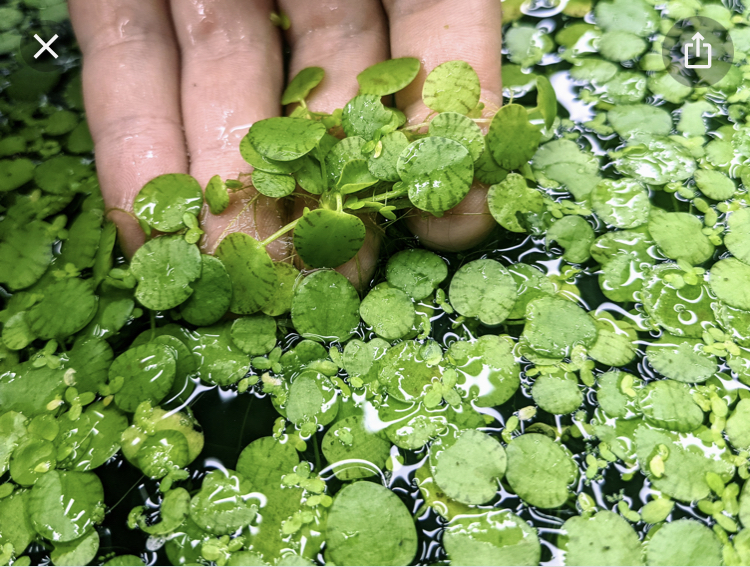
You have to have Water Hyacinth! These floating plants are so cool! Their roots hang down into the water for fantastic filtration.
Keep in mind, they cannot withstand a hard freeze.
If you have 2 of them – you have 1000! At first it will happen slowly. Each plant will create 3 miniature replications of itself. So cute… but before you know it they are EVERYWHERE!
What to Know:
Do I consider these invasive? Well they can be and should never be let go in a natural waterway, but in a small pond they can be kept under control. They have bulbous green round parts that are filled with air and will pop if you stop on them. When they overgrow, just take some out and compost them.
The best thing about these is If you let a couple go into your waterfall and either let them get stuck on the side or help them by putting a rock on the roots, they will make babies going down the side of the water fall! They cascade down and it is so pretty.
Put them where they won’t get swept into the skimmer. Some people put a floating hoop in and fill it with these.
There is a secret to getting them to bloom too. The blooms only last one day, but to get them to bloom, let them crowd each other and be way crowded. Then they will flower!
Water Iris
Or Red Stemmed Alligator Flag
Botanical name: Thalia geniculata ruminoides
Hardiness Zone: 3-9
Perennial or Annual: Perennial
Planting Depth/Habitat: Bog Plant, Planting Zone 1, (0 to 6 inches down)
Size: 2 to 4 feet
Flowers: Yellow is the most common in Colorado but iris come in most colors.
Tags: Bog Plant, Planting Zone 1,
What to Know:
Iris are a staple pond plant. They add so much to the natural filtration process. They bloom in the late spring (depending on the variety you have). After blooming their green broad leaves are still beautiful.
For a relaly lush look you can plant terretrial
Water Lettuce
or Water Cabbage
Botanical name: Pistisa stratioes
Hardiness Zone: 9 to 11
Perennial or Annual: Annual
Planting Depth/Habitat: Floating plant
Size: 3 to 12 inches tall.
Flowers: no
Tags: Floating Plant
What to Know:
What to know:
These floating velvety green leaves create roots hanging down that filter pond water! While they don’t flower, they are still lovely.
Once you have a couple, you will have hundreds or thousands before you know it. Just pull them out when they are too many.
Water Lily
Botanical name: Nymphaea
Hardiness Zone: 4 to 11
Perennial or Annual: Perennial
Planting Depth/Habitat: best when pot is set 30″ below water line or directly in pond gravel/muck at 24″.
Size: spread 2 to 5 feet (depending on variety)
Flowers: You can get lilies is practically any color!
Tags: Floating Plant, Emergent plant
Read more about water lilies:
What to Know:
Flowers come up and open mid morning and close mid afternoon. They re open for roughly 4 days and then they die back. Soon there will be new blooms! Flowers often bloom from June until September. The roots of water lilies are called “rhizomes” and often referred to as “tubers”.
I recommend fertilizing them each month to keep blooms vigorous!
Water lilies can spread rapidly through a pond even going 15 feet in 5 years. It helps to have them in a pot because you can more easily pull them out for fertilization. But more importantly, you can pull them out to divide the tuber and either remove it so the lilies don’t get over crowded or repot for new lilies.
Yerba Mansa
Botanical name: Anemopsis californica
Hardiness Zone: 5-9
Perennial or Annual: Perennial
Planting Depth/Habitat: Bog Plant, Planting Zone 1, 2 inches below water (soil line)
Size: 6 to 12 inches
Flowers: white flowers
Tags: Bog Plant, Planting Zone 1, Hardy in Colorado
What to Know:
The long center coned flowers are very white. These are not invasive and have been coming back in our pond every year.
You may find more plants on line for various sites, these are the plants most readily available in this area. If you choose to order plants on your own, make sure you have the right soil (if you are using soil) and understand where to plant them (depth of water, should water be moving or not moving, do they need to be in a pot or out of a pot?) As well as what Zone they grow best in and their invasive tendencies.
From this list, the only plant I have not grown myself is the Lotus.