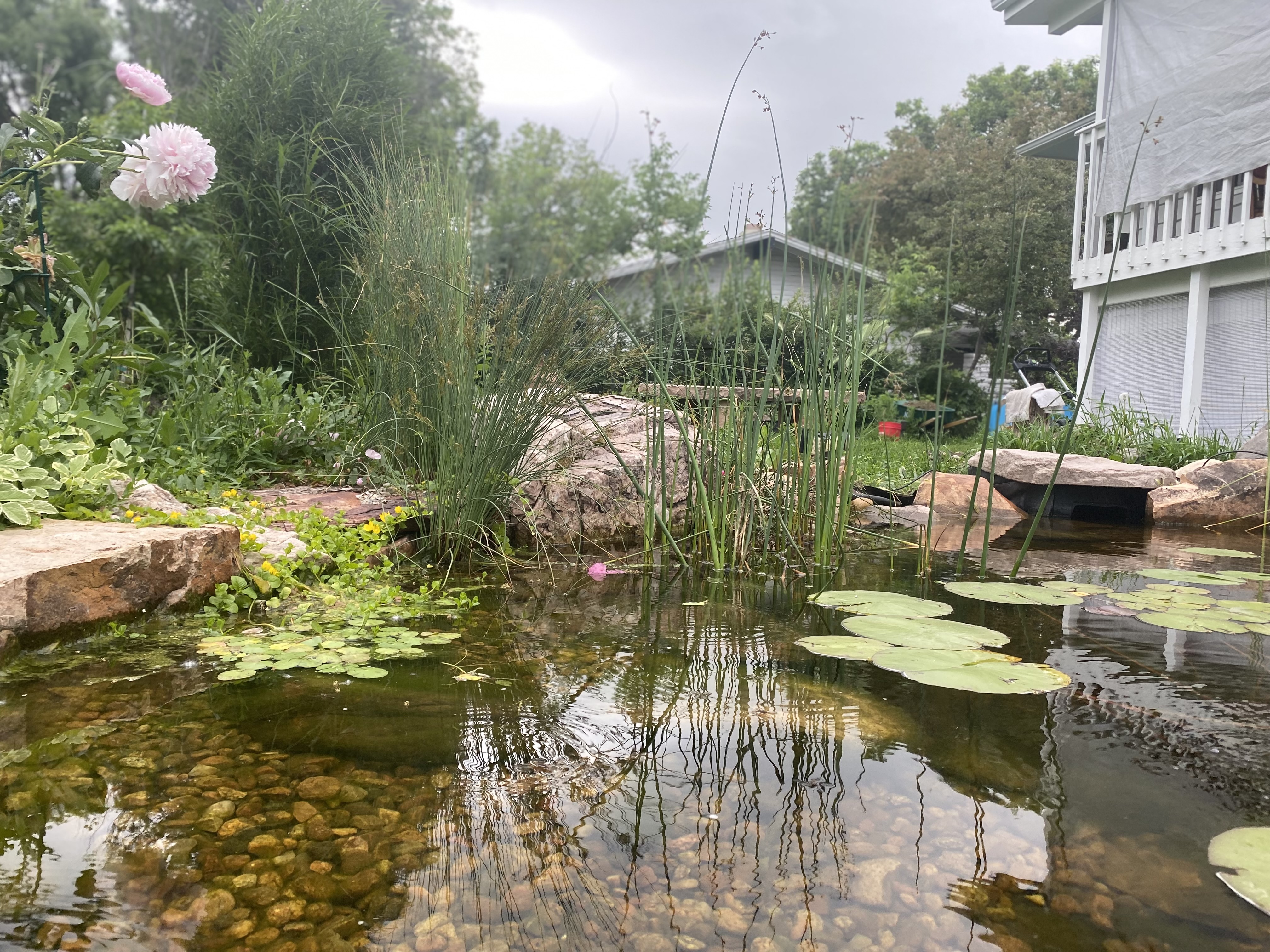
They are plants that reproduce or spread so quickly that they can take over a whole pond. You can end up spending and inordinate amount of time pulling them out or trying to get rid of them.
Should I never have any of these plants?
Not necessarily. If you are very hands on and willing to deal with the invasive nature of these plants, they can be excellent filtration. It's just good know what you're getting into.
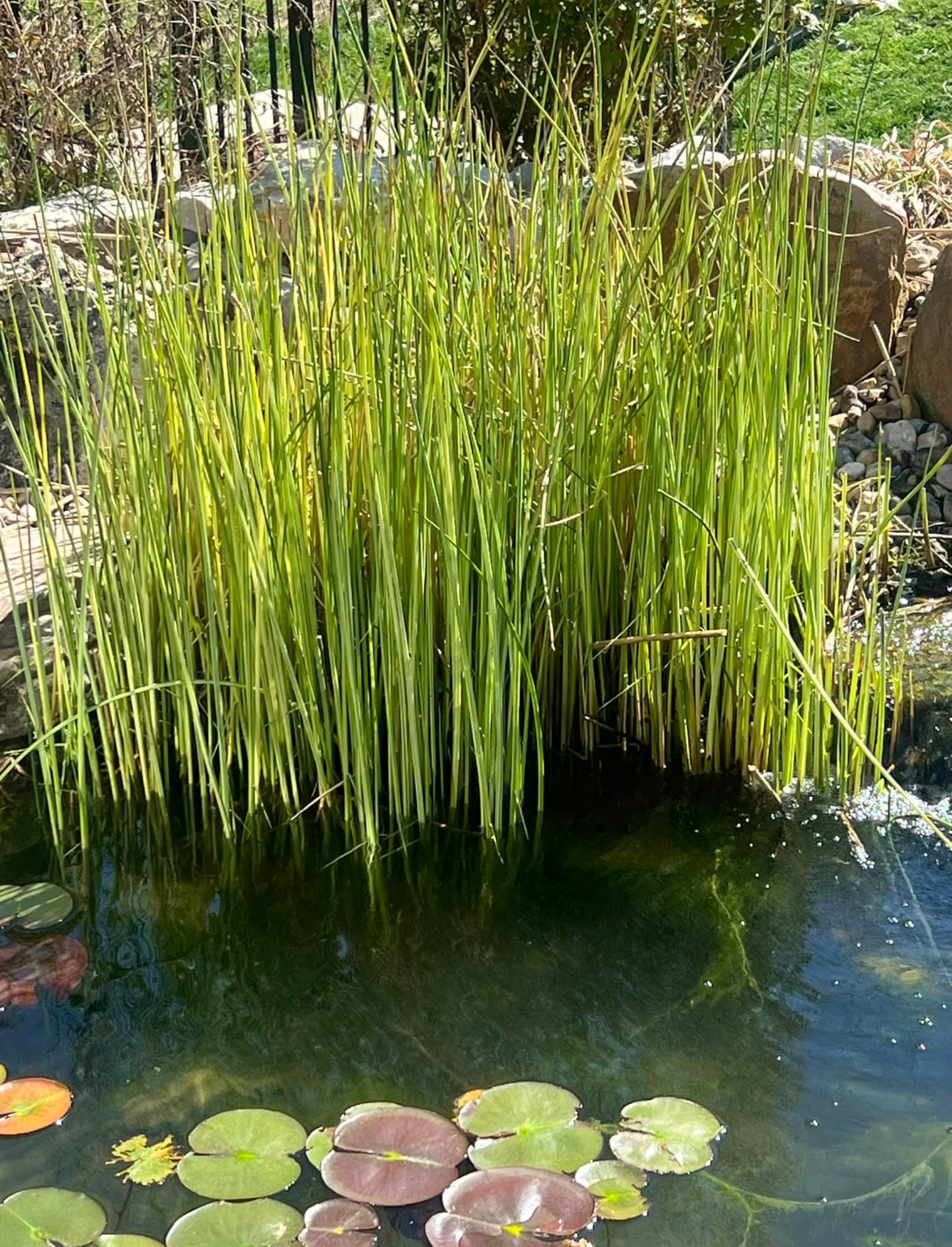
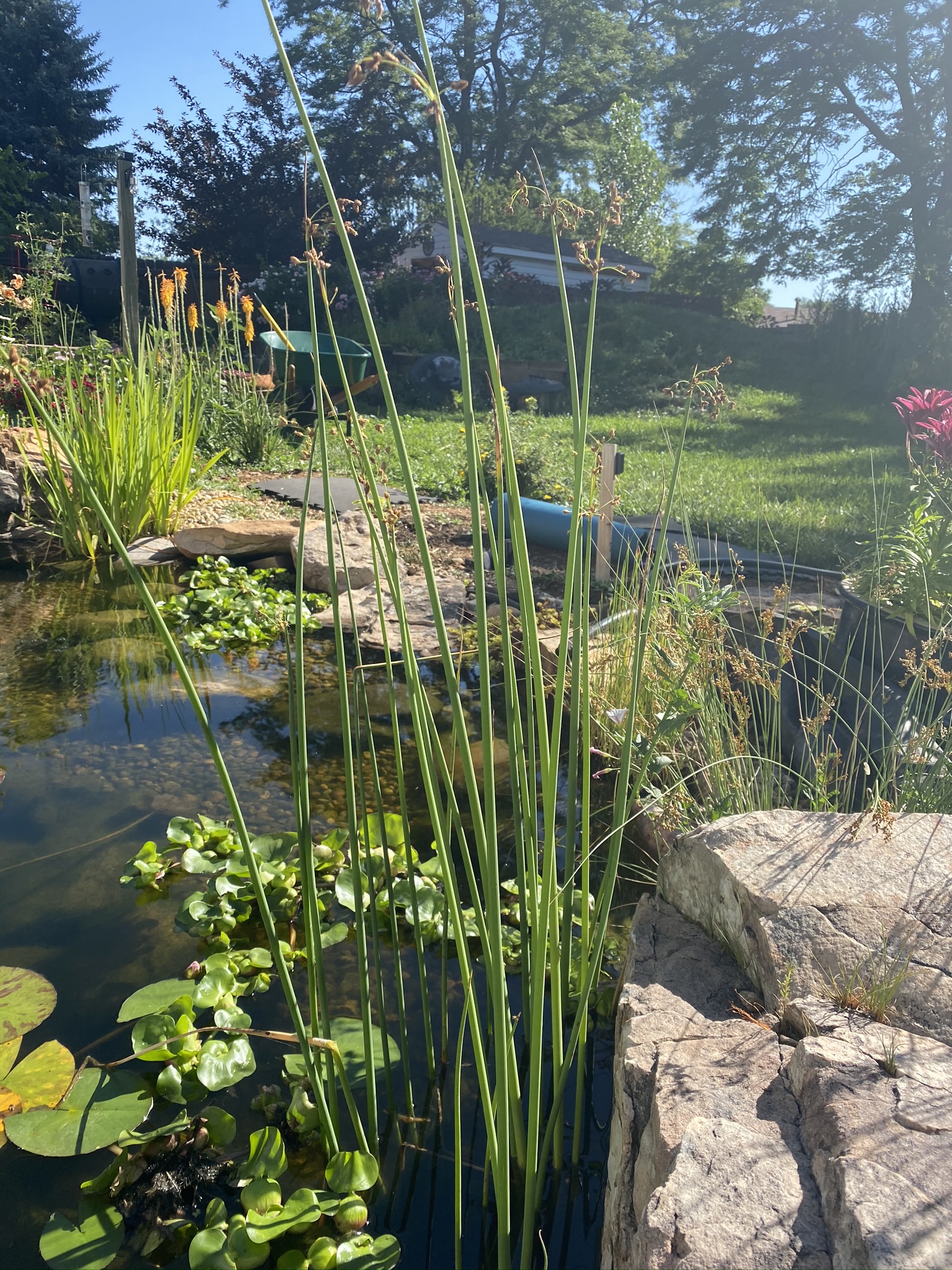
Bulrush
or Common Rush
Botanical name: Juncus effusus
Hardiness Zone: 4
Perennial or Annual: Perennial
Planting Depth/Habitat: Marginal, Planting depth Zone 2. 2 to 5 inches above soil line. When they are mature they will go deeper.
Size: 2 to 4 feet, it s a spreader!
Flowers: not really
Tags: Rush, Marginal Plant, Planting depth one 2, Hardy in Colorado
What to Know:
This is a nice vertical plant that is great in larger ponds to add a lushness to the edge. Dragonflies love bulrush!
The rushes are round like onion plants and one sign that it is Bulrush is the little doodad at the top that it develops.
Be careful though, it can try to take over if not watched. It doesn’t like the deeper water so that does help.
Cattail
or Typha, reed mace, reedmace
Botanical name: Typha latifolia
It doesn’t matter – stay away form these unless you have an acre sized pond and don’t mind them going nuts.
Tags: Invasive
What to Know:
Whether we are talking about narrow leaf cattail, broadleaf cattail or some other kind…..DON”T DO IT!
Yes, Mother Nature uses them all of the time for great filtration but they can take over a small backyard pond faster than you can imagine.
You would think they wouldn’t be to hard to get out if they are in a lined pond, right? Wrong! Their tubers grow in thick mats that have to be CUT OUT! (dangerous to cut something just over the liner of the pond!)
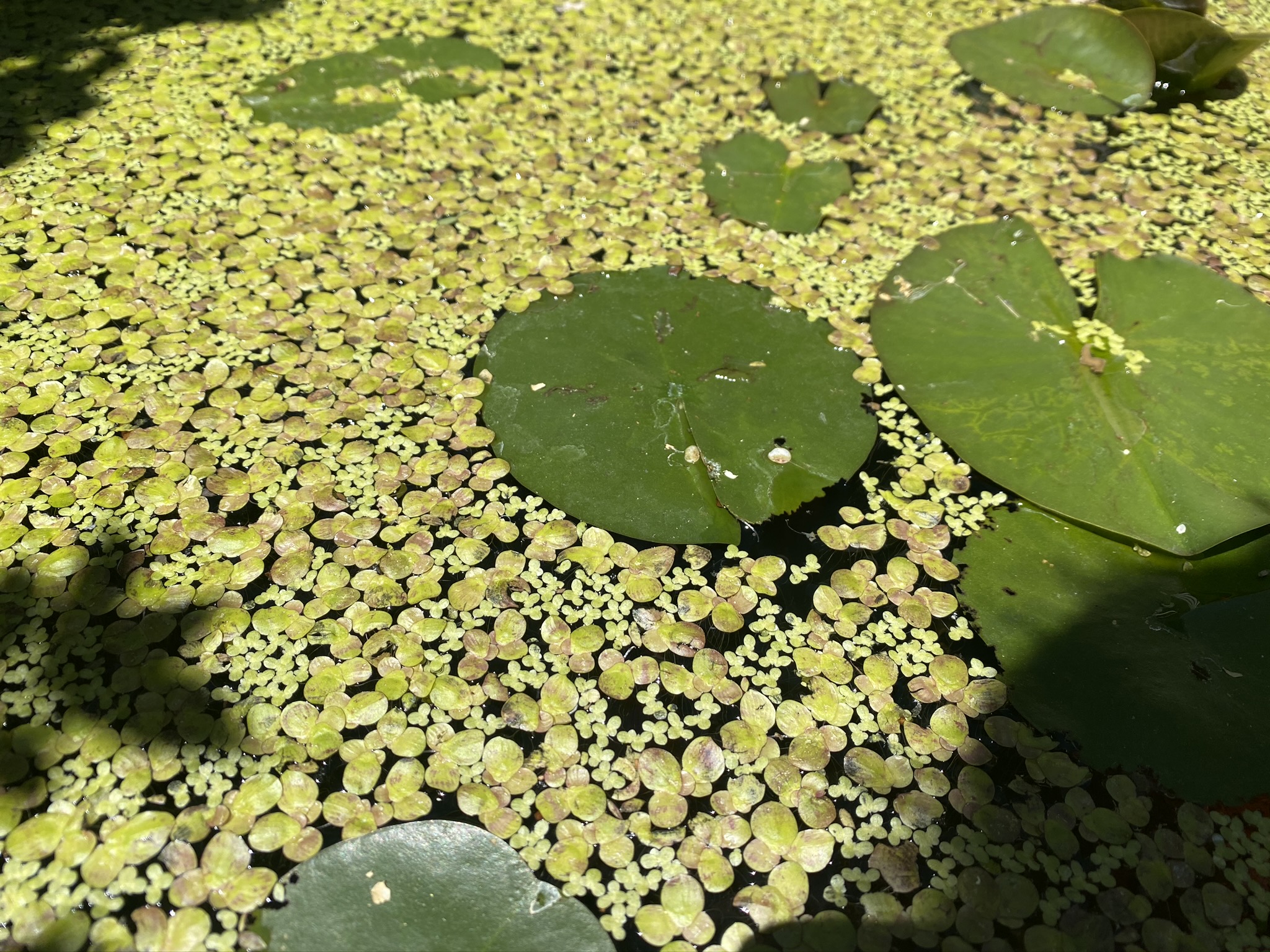
Duck Weed
Botanical name: lemna minor
Hardiness Zone: 4- 10
Perennial or Annual: Perennial (it will come back each year)
Planting Depth/Habitat: it floats
Size: tiny
Tags: Invasive plant
What to Know:
This little plant and grow and cover a whole pond in no time! It prefers water that is stagnant or very slow-moving. Sometimes koi will munch on it. When a little has gotten into our pond it was not a problem at all because of the good flow. Good aeration also discourages it.
While it is not harmful necessarily, it can block the sun and choke out other plants.
It does die off in the winter and will come back (slowly at first) the next year.
Fairy Moss
or Fairy Fern or California Mosquito plant
Botanical name: Azolla caroliniana
Hardiness Zone: 7 to 10
Perennial or Annual: Annual
Planting Depth/Habitat: Floating.
Size: Tiny
Tags: Invasive plant
What to Know:
This is very similar to duckweed. Roots hang down and actually filters the water. It is really happy in stagnant water.
If this starts up in your pond find ways to create better circulation an aeration. Net it out the moment you see it – even 1!
Both duckweed and fairy moss will just suddenly be in stagnant water. They volunteer. I get it out as soon as I see it in my lily pond that has less circulation.
Iris
Botanical name: Iris ensata
Hardiness Zone: 3-9
Perennial or Annual: Perennial
Planting Depth/Habitat: Bog Plant, Planting Zone 1, (0 to 6 inches down)
Size: 2 to 4 feet
Flowers: Yellow is the most common in Colorado but iris come in most colors.
Tags: Bog Plant, Planting Zone 1,
What to Know:
Irises can get out of control and be somewhat invasive. That being said, they are not as crazy as some of the others on this list. Just cut some out when they are growing past the point that you want them too. They are great filters and we need them!
Water Celery
or Variegated water celery
Botanical name: Lobelia cardinalis
Hardiness Zone: 5-11
Perennial or Annual: Perennial
Planting Depth/Habitat: Bog Plant, Planting Zone 1, Soil line at water line.
Size: 1-2 feet
Flowers: tiny white flowers
Tags: Invasive, Bog Plant, Planting Zone 1, Hardy in Colorado
What to Know:
Alright, yes, this is a great filter plants….However, this plant is extremely invasive. That being said, in some situations it is perfect.
Stay away from Water Celery if it is an area you may want other plants (ever)! We put in one small plant and when it started spreading, I thought we should take it out. But we didn’t. I will be forever pulling this plant out! It traveled its way up the stream trying to crowd out other plants.
It can really wind its roots through rocks and tight places which is what makes it so hard to get out.
So when is it perfect? When the pond has steep sides, no shelves, and no way to plant plants. Put this plant in as best you can so the roots touch the water. Then just stand back. First year you’ll have amazing growth and will be pleased. 2nd year you will be amazed that it is growing out of places you can’t even reach! Read my Water Celery Epiphany HERE to find out more.
Water Hyacinth or Water Lettuce
I am just lumping these 2 together here!
What to Know:
Because yes, they are invasive, yes, they are outlawed in some southern states but here in Colorado- they are SO GREAT! just net them out when there are too many! Potentially don’t put them in an acre size or larger pond – you couldn’t keep up with them. In a small backyard (or front yard) pond, they are lovely. Red more about them in the Floating plants gallery.